Wow!
So I was poking around on-chain data last week and got fascinated by how much context a good explorer can provide. My instinct said somethin’ felt off about how many users track liquidity and token movements. Initially I thought all explorers were roughly the same, but after chasing transactions, decoding memos, and comparing address histories I realized that the right explorer—one with fast indexing, clear token pages, and robust API support—changes how you make decisions on Solana, especially when time is money and errors cost real dollars.
Really?
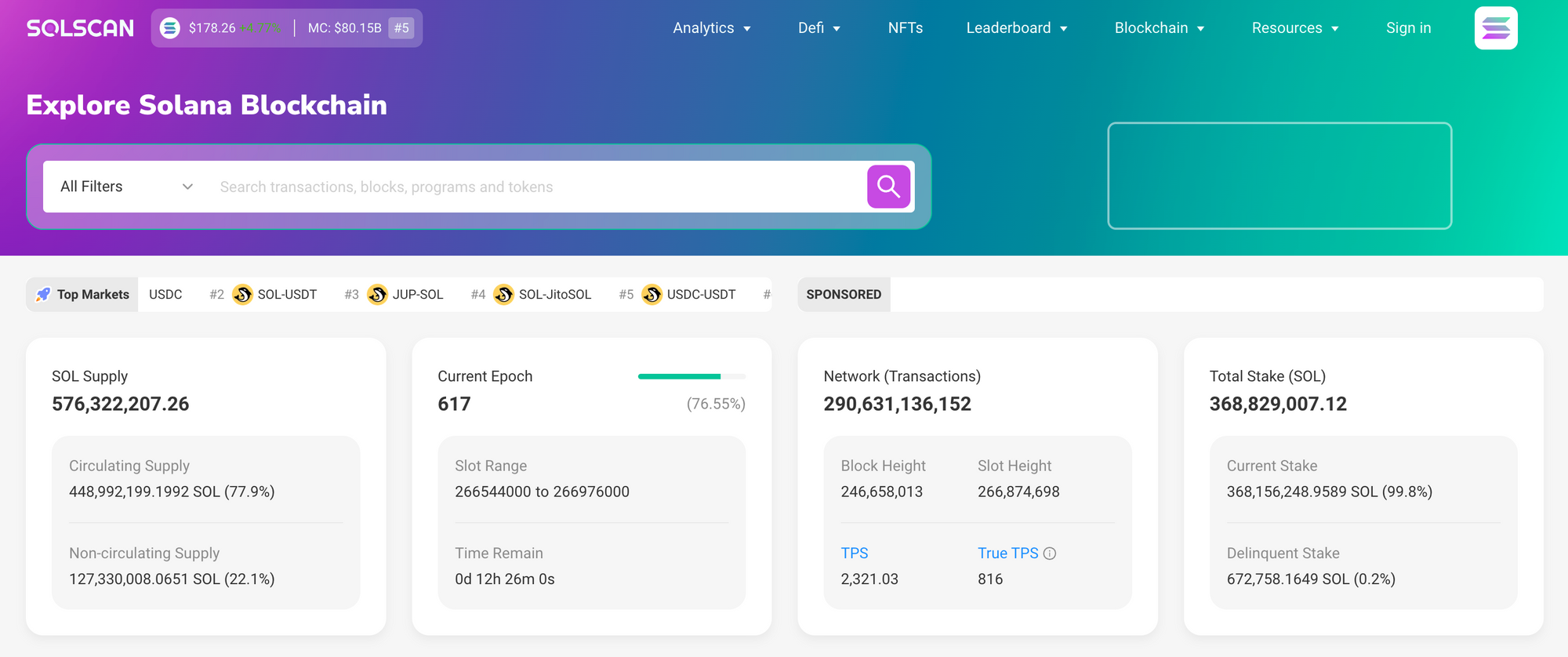
Solscan has been my browser of choice for months now because it balances raw data with approachable UIs. The token tracker features are crisp; they show supply curves, holders, and recent transfers without being cluttered. On one hand some explorers prioritize raw RPC logs and developer tooling, though actually, wait—let me rephrase that, on the other hand some favor sleek dashboards that hide nuance, and Solscan manages to sit between those extremes by offering both deep dives and quick glances for retail users and power traders alike. I’m biased, but that dual access is a big deal.
Hmm…
If you trade or audit tokens you want a reliable token tracker that tells you who holds what, when big transfers happen, and whether token mints are paused or frozen. Solscan surfaces those events clearly and tags verified projects, which cuts down the time you spend cross-checking. There are features that tend to go unnoticed—like internal instruction decoding and on-chain staking dashboards—which, when combined, let you trace funds across programs and follow liquidity flows in ways that make sense for both front-end traders and deeper forensic work. This is the move when you need to vet a new token quickly.
Seriously?
A quick tip: use the token holders view to spot concentration risk, then cross-reference big wallets with the transaction timeline to see if they’re movers or just passive holders, which is very very important. You can export CSVs for deeper analysis, or call the Solscan API if you’re building alerts. Initially I thought on-chain alerts were only for whales and bots, but then realized that setting a few targeted alerts for sizable transfers or unexpected mints can protect small portfolios too, because catching a rug pull early is sometimes the difference between a small loss and wiping out a position. Also, the transaction decoder often reveals memos or program calls that you’d otherwise miss.
Here’s the thing.
Not all token trackers are equal—some lag during network spikes, some show stale holder lists, and some simply don’t surface program-specific details (oh, and by the way… that bugs me). Solscan’s speed and indexing fidelity tend to hold up even under heavy traffic, which matters during high volatility. On the technical side, their indexing approach handles parallelized processing and relies on decoded instructions so that complex swap sequences, wrapped token movements, and cross-program invocations appear as coherent flows rather than opaque blobs in the ledger. That clarity reduces cognitive load when you’re triaging trades.
Practical tips and a quick recommendation
Whoa!
But hey, nothing’s perfect; I still run checks on-chain with other tools occasionally for corroboration. For instance, I like to cross-check mint authority changes and token metadata edits with on-chain program logs. Initially I harbored doubts about centralized explorers failing users at critical moments, but after testing fallback strategies—like local RPC queries, diversified alert endpoints, and code that verifies token supply against on-chain sources—I felt more confident that a workflow built around a reliable explorer can be resilient, even though edge cases will always exist. Okay, so check this out—if you’re new to Solana explorers start with token pages, explore the holder distribution, and then track recent large transfers to build an intuition.
Wow!
If you want a quick primer, the solscan explorer token pages are a great place to start. They neatly summarize supply, holders, transfers, and program interactions without overwhelming you. On top of that, for builders who need program-level data there’s an API and many endpoints that let you pull verified token info, enrich dashboards, or trigger alerts as part of CI pipelines, so you don’t have to scrape UIs or rely on fragile front-end assumptions when building tools. I’ll be honest, I still mess up sometimes and follow the noise, but using a consistent explorer workflow keeps me from repeating dumb mistakes…
FAQ
How do I verify a token quickly?
Really?
Look at the mint authority, holder concentration, and recent big transfers; then decode a few transactions to check program interactions. If you automate checks you can run these heuristics across hundreds of tokens and flag potential issues before they hit your front-end or alert channels.
Laisser un commentaire